
Japan in full, with Tokyo Disney included as a gift:
Cities: Tokyo, Hakone, Kyoto, Nara, Hiroshima, Osaka.
Price from: $4,699 USD per adult (double occupancy basis)
Date: July 28, August 19, October 20, 25, 2026.
Duration: 11 days / 8 nights
INCLUDES |
International flight Mexico–Tokyo–Mexico (with Aeroméxico). Baggage allowance: 2 checked bags of 23 kg each and 1 carry-on bag of 8 kg. Transfers Airport – Hotel – Airport Bullet train transfer Tokyo – Kyoto Bullet train transfer Osaka – Tokyo 5 nights accommodation in Tokyo 3 nights accommodation in Kyoto 8 breakfasts, 5 lunches. Tours as indicated in the itinerary
Professional Spanish-speaking guides |
NOT INCLUDED |
Optional tour (minimum 15 passengers).
Travel assistance insurance |
IMPORTANT NOTES:
- Block booking considered for 34 passengers.
- For better comfort on this tour, double occupancy accommodation is recommended.
Due to local customs, hotels have a limited number of rooms with double beds. If requested, these will only be guaranteed up to 30 days prior to departure. If requested, it will be guaranteed up to 30 days prior to departure.
- The exchange rate to be used at all times is the BBVA Bancomer rate at the time of payment. You can check it directly on the BBVA.MX
- Payment methods:
- Transferencia bancaria, depósito bancario y pago en efectivo.
- Payment conditions:
-
- A minimum deposit of 500 USD per passenger is required to confirm the reservation.
- 4 months before departure (120 days), 50% of the reservation must be paid.
- 2 months before departure (60 days), the total balance of the reservation must be paid in full.
- To issue electronic tickets, a copy of a valid passport is required with at least 180 days of validity from the return date. The passport must be in good condition, without stains, damage, mutilations, or humidity; otherwise, check-in will not be permitted.
- It is the responsibility of the travel agency and/or the passenger to review and obtain the required documentation for travel, whether in transit or upon entry to the destination being visited.
- To speed up entry. Japan, we suggest completing the form 3 days prior to your arrival: SG Arrival Card
- Hotel check-in is at 2:00 PM and check-out at 12:00 PM; early check-in or late check-out requests are subject to availability and may incur an additional charge.
- Itinerary and planned hotels are subject to last-minute changes due to weather conditions, extraordinary circumstances, pandemics, acts of war, or other factors beyond the Operator’s control.
| OCCUPANCY | PRICE IN USD |
|---|---|
| DOBLE / TRIPLE | $ 4,699 |
| SINGLE (+SUMPLEMENT) | $ 999 |
| CHILDREN FROM 2 TO 8 YEARS OLD | $ 4,399 |
| INFANTS: 1 to 23 months* | ONLY AIR TAXES APPLY. |
Note:
*Air tax (infant 1 to 23 months) calculated at the time of booking; approximate fare: 900 USD.
Official exchange rate of BBVA Bancomer at the time of payment.
PLANNED HOTELS
| CITY | 5* ACCOMMODATION |
| TOKYO | GRAND NIKKO TOKYO DAIBA |
| KYOTO | KYOTO TOKYU HOTEL |
List of hotels most frequently used in these circuits. Provided for reference purposes only; accommodation may be confirmed in similar hotels.
If you need more information or want to book, please contact us.
Book Now
Day 1: MEXICO - TOKYO
-
Meet at Mexico City airport to board the flight to Tokyo. Overnight on board.
Day 2: MEXICO - TOKYO
-
Day at sea (in transit). Due to the time difference of 14 hours between Mexico and Japan.
Day 3: TOKYO
-
Arrival at Narita Airport, Tokyo. After completing immigration and customs procedures, reception and transfer to the hotel. Overnight stay.
Day 4: TOKYO
-
Breakfast/Lunch. At the indicated time, meet in the lobby to begin our visit. We will start at Meiji Shrine, built in 1920, a Shinto sanctuary dedicated to Emperor Meiji, who ruled from 1852 to 1912 alongside his wife, Empress Shoken; both are recognized for transforming Japan into a modern nation. Located in the popular Harajuku district, the site chosen for its construction was a lily garden that was frequently visited by the Emperor and Empress. The shrine is surrounded by a forest of 120,000 trees of different species and, being next to Yoyogi Park, it represents an ideal place of rest in the middle of one of the busiest areas in Tokyo.
-
Both the inner and outer areas of the complex feature notable sites such as the main Torii gate, Minami-sando, a stone pathway adorned with traditional sake and wine barrels, and the Great Torii, the largest of its kind in Japan at 12 meters high and 1.71 meters wide. At the end of the path, you will reach Temizu, an area dedicated to the water purification ritual, which must be performed before entering the shrine. We will pass through Minami Shinmon Gate, built in 1920 from Japanese cypress (hinoki) and copper. As you pass through it, you will notice heart-shaped designs in the wooden and metal ornaments, considered a protective charm against fire.
-
Next, the main hall, or Honden, is the most sacred building in the complex, where the shrine’s deities are enshrined. It is constructed in the nagare-zukuri architectural style, made of Japanese cypress wood with copper-clad roofs. The Honden consists of several structures: the prayer hall (noritoden), the inner hall (naihaiden), and the outer hall (gehaiden), all dedicated to visitor prayers.
-
Further along, Meoto Kusu are two trees planted when the shrine was built in 1920. They have grown together healthily over the years and today symbolize a happy and harmonious marriage. This spot is popular among those seeking a partner or couples preparing to marry.
-
In the main hall, on the right-hand side, there is an area dedicated to ema wooden plaques. Every morning, the shrine priests offer the deities the ema from the previous day in a ritual called mikesaiWhen they accumulate, they are burned in a fire ritual so that these wishes can reach the deities (and make room for new ones) ema). Don’t forget to take your omamori; among the most popular are sowa-mamori, a special charm for good luck in love, infused with the scent of camphor trees.
-
We will continue with a visit to the oldest temple in the city, one of the most colorful and popular, Senso-ji Temple, also known as Asakusa Kannon.
-
It is the most visited temple in Japan, attracting over 20 million visitors annually, and is also one of the most frequented spiritual sites in the world. Its history dates back to 628 AD. According to legend, two brothers discovered a golden statue of Kannon in the Sumida River while fishing. Although they returned the statue to the water, it miraculously kept coming back to them. Due to this seemingly divine event, the leader of the small village of Asakusa decided to convert his own home into a shrine to house the statue and encourage local worship. The first construction of Senso-ji Temple was completed in 645 AD.
-
Senso-ji features an extensive complex that includes the main temple building, a five-story pagoda, and the adjacent shopping street, Nakamise-dōri. A key feature of the modern temple, the Torii gate marking the entrance to the inner shrine of Nishinomiya Inari, was erected in 1727. Although much of the Senso-ji complex was unfortunately destroyed during World War II attacks in Tokyo, the temple has been fully rebuilt and is now considered a symbol of rebirth and peace in Japan.
-
To conclude, we will visit the Imperial Palace Plaza, starting at Kikyomon Gate. You will have the opportunity to see historic and beautiful sites, such as the watchtower with views of Mount Fuji and the lotus flower moat. Naturally, we will cross Niju Bridge, considered a symbol of the palace and of Tokyo itself. Al término del tour regreso al hotel. Alojamiento.
Day 5: TOKYO - HAKONE - TOKYO
-
Breakfast/Lunch. At the indicated time, meet in the lobby to begin our... Hakone excursion.
-
Recognized for hundreds of years as a relaxing enclave between Tokyo and Kyoto, Hakone offers peace and rest in the midst of nature and warm hot springs outside the city. We will take a boat ride on Lake Ashi, from where we will have the opportunity to take spectacular photos of the large red torii gate located on the lake’s shore. Its surroundings create an atmosphere that seems to shield it from the modernity of the city, forming a mystical setting. The lake is one of the Five Lakes within Hakone National Park, with Lake Ashi being perhaps the most important of them.
-
Arguably the best view of Lake Ashi is from above, so we will make a stop at the cable car to reach Mount Komagatake, an exciting and scenic journey. The ride covers two kilometers up to the mountain’s summit, where Hakone-Jinja Shrine was once located. The view from this point is breathtaking from any angle, offering some of the best panoramas of Mount Fuji and Owakudani. Thanks to the lake’s privileged location at the base of Mount Fuji, you can even see its reflection on calm days. Additionally, the summit of Mount Komagatake is lush with vegetation, making it an ideal vantage point to explore Hakone National Park.
-
We will end our day in Owakudani Valley, also known as the Valley of Boiling, originally called the Hell Valley. Formed by a volcanic eruption over 3,000 years ago, the valley features sulfurous waters and steam, creating a fascinating and unique landscape. It is especially popular for its volcanic activity and the delicious black eggs boiled in the hot springs. Today, it is one of Hakone’s most famous tourist areas, offering stunning panoramic views, and on a clear day, visitors can enjoy spectacular views of Mount Fuji, creating an almost fairytale-like landscape. At the end of the tour, return to the hotel for overnight stay.
Day 6: TOKYO - KYOTO - NARA - TOKYO
-
Breakfast/Lunch. Meet in the hotel lobby for transfer to Tokyo Station to take the Nozomi Bullet Train #19. Arrival in Kyoto, reception by the guide.
Your luggage will be sent separately by truck from the hotel in Tokyo to the hotel in Kyoto. The luggage will arrive in Kyoto in the afternoon of the same day.
-
We will start the day at the vast Nara Park, or Nara Kōen in Japanese, located at the foot of Mount Wakakusa, where you will find a multitude of friendly, playful deer. The more than 1,000 deer are considered messengers of the gods and have become a symbol of the city, even designated as a natural treasure. Nara Park, founded in 1880, is a natural setting that houses temples within pristine forests and a lake inhabited by turtles and carp.
-
It is worth noting that the temples and shrines of Nara are even older and more unique, such as the Nara National Museum, which preserves Japan’s Buddhist religious heritage, making the building itself an architectural marvel.
-
Kōfuku-ji Temple, celebrating its 1,300th anniversary, has had a profound influence on Japanese culture. Kasuga Taisha Shrine, dedicated to the deity responsible for protecting the city, was recognized as a UNESCO World Heritage Site in 1998. Its most distinctive feature is the 3,000 stone and bronze lanterns that adorn the shrine.
-
Tōdai-ji Temple is renowned as the largest wooden building in the world. It was founded during the 710–784 period, when Nara was the capital of Japan, and is recognized as a UNESCO World Heritage Site. Inside, visitors can admire a 15-meter-tall statue of Buddha, known as the Great Buddha or Daibutsu.
-
We will continue to Gion, one of the most famous geisha districts in all of Japan, and likely the most popular, visited, and visually captivating.
-
Entering Gion is like traveling back in time, walking through its narrow, cobblestone streets lined with traditional wooden houses and decorated with the distinctive chochin lanterns, along with a variety of charms on rooftops and doors. Your path will be filled with tea houses, geisha houses, and traditional shops selling sweets, textiles, ornaments, and makeup. It is an evocative stroll that is truly worth experiencing.
-
At the end of the tour, transfer to the hotel in Kyoto for check-in. Overnight stay.
Day 7: KYOTO
-
Breakfast/Lunch. This morning we will begin with one of the most famous temples in Kyoto, Kinkaku-ji , also known as the Golden Pavilion. Originally, it was the villa of a court noble. Over time, and after several incidents, it was rebuilt in 1955, and later, in 1987, it was covered with gold leaf.
-
Today, it is known as the Golden Pavilion. for a simple reason: its two upper floors are covered in gold leaf, and the shine of its surface reflects beautifully in the Mirror Pond. Additionally, the temple is surrounded by pines and maples, creating an enchanting setting that is perfect for strolling and meditation.
-
Following the path, we arrive at Ryoan-ji Temple, or the Temple of the Peaceful Dragon. It was destroyed during the Ōnin Wars (1467–1477) and rebuilt in 1499 by Hosokawa’s son. From that moment, it served as a mausoleum for various emperors, with support from both Toyotomi Hideyoshi and the Tokugawa clan. At its peak, it housed 23 sub-temples. Today, Ryoan-ji has become a very famous temple, especially renowned for its rock and raked sand garden, making it one of the most interesting and attractive tourist spots in Kyoto.
-
The day continues with another beauty, the Fushimi Inari Shrine, of Shinto origin. with its memorable Torii gates, this site is dedicated to Inari, the deity of good harvests and success in business. It is the most important shrine of its kind in all of Japan.
-
The path up the mountain—233 meters high—is lined with stone altars called otsuka and framed by around 10,000 vibrant orange Torii gates, forming a magnificent tunnel. This makes it a site of intense beauty and one of the most iconic images of Japan.
-
Sanjūsangendō Temple, known for housing 1,000 statues of Kannon inside, is supported by 33 pillars, which also symbolize the 33 incarnations of Buddha. At 120 meters long, it is the longest wooden structure temple still standing in Japan. The temple was rebuilt with special attention to earthquake and fire prevention, using foundations that absorb underground vibrations and a double-beam roof structure, enhancing its stability.
-
Inside it are 1,000 Kannon statues arranged along the length of the temple around a wooden Buddha statue made of cypress wood and covered with gold leaf. They are life-sized; each has 40 arms and displays the 11 faces of Buddha. Sanjusangendo houses magnificent sculptures of the God of Thunder, the God of Wind, and, surrounding them, the 28 guardian deities of their followers. At the end, take a moment to walk through the temple gardens. Outside, you will find cherry and maple trees surrounding a pair of ponds, along with a stone monument in honor of Honen, founder of the Jodo sect of Buddhism. At the end of the tour, return to the hotel. Overnight stay.
Day 8: KYOTO
-
Breakfast. Free day for personal activities.
It is suggested to take the optional excursion to Hiroshima (lunch included), at an additional cost.
-
At the appointed time, meet in the lobby for transfer to Kyoto Station.
-
We will start the day with a ride on the Nozomi Shinkansen to Hiroshima Station. There, we will visit Miyajima Island (the “Island of the Shrine”), officially named Itsukushima, located about 20 km within Hiroshima Bay. This site has been a sacred Shinto location for centuries and is home to the Itsukushima Shrine, a UNESCO World Heritage Site. It is famous for its giant O-torii gate, 16 meters tall and made from 500–600-year-old camphor trees. When the tide is high, the gate appears to float on the water, creating one of Japan’s three most iconic views.
-
It is worth highlighting that Mount Misen, located behind the shrine, is very interesting. From a distance, it appears to take the shape of a woman’s body, which leads the locals to believe that the mountain is a Kami (Shinto deity).
-
At the end, we will head to the Peace Memorial Park, built in an area devastated by the bomb, formerly known as Nakajima, the political, administrative, and commercial heart of Hiroshima. This park is dedicated to Hiroshima’s legacy and commemorates the bombing at the end of World War II. Beneath the site of the bomb’s explosion, it houses the Atomic Bomb Dome.
-
Next, we will visit the Atomic Bomb Dome, arguably the most famous memorial in Hiroshima and within the Peace Memorial Park due to its tragic history. This 25-meter-tall European-style building was originally crowned with a copper dome on a steel frame, which was exposed by the explosion. It was the only structure left standing near the bomb’s hypocenter, just 150 meters away. What you see today is exactly what remained from that fateful day, with only a few interventions made to preserve the building’s structural integrity.
-
Continuing with the tour, we will visit the Peace Memorial Museum, where we will learn in detail about the events of the bombing, view artifacts and materials used, and gain a deeper understanding of the tragedy. We will also admire the Thousand Cranes Tower, a sculpture that commemorates all the children who died as a result of the atomic bomb. There is a beautiful tradition: if you make origami cranes, the Kami grant you a wish. These cranes are also given at births and weddings as a symbol of a long and prosperous life.
-
At the end of the visit, transfer to Hiroshima Station and depart for Kyoto on the Nozomi Shinkansen. Upon arrival in Kyoto, transfer to the hotel. Overnight stay.
Día 9: KYOTO - OSAKA - TOKYO
-
Breakfast/Lunch. At the designated time, meet in the hotel lobby to begin the city tour.
¨Sus maletas serán enviadas aparte en camión desde el hotel en Kyoto hasta el hotel en Tokyo. Las maletas llegarán a Tokyo en la tarde del mismo día¨
-
Saldremos directamente a Umeda, un importante distrito comercial de negocios, con grandes áreas destinadas a compras y entretenimiento, dentro de un complejo de estaciones Osaka Station y Umeda Station. Osaka cuenta con dos centros al sur Namba y al norte Umeda.
-
Conoceremos Umeda Sky building, un rascacielos altamente sofisticado, su construcción concluyó en 1993 y fue diseñado por Hiroshi Hara. Su estructura se compone 2 torres de 173metros de altura y 40 pisos conectadas entre sí por una escalera mecánica y al centro un puente horizontal. Hoy en día es uno de los observatorios panorámicos más futuristas de Japón y el mundo, vale la pena conocer esta construcción única de arquitectura contemporánea.
-
Osaka-jo es un importante castillo situado en plena ciudad de Osaka aun cuando es una reconstrucción del siglo XX.
-
En la historia de la unificación de Japón tiene un papel de gran importancia; es uno de los tres castillos japoneses más destacados. Desde su construcción en 1583 de la mano de Toyotomi Hideyoshi y hasta finales de la década de 1990, ha pasado por diferentes remodelaciones a causa de conflictos bélicos de la historia. Hoy en día, con su ubicación al centro de un parque enmarcándolo sutilmente en cualquier época del año, podremos sentarnos a descansar y gozar de las vistas que ofrece, rodeado de cerezos, ciruelos y albaricoques en flor,
-
Osaka tiene atracciones para todos gustos, y una extravagancia de colores neón y entretenimiento nos espera en el Times Square de Osaka. Dotonbori, es un lugar de culto para todos los visitantes que aman la fiesta.
-
This district shines with impressive neon signs, nightclubs, bars, and restaurants, where you should experience the local cuisine and a bit of the exciting nightlife. The first Glico sign was installed here in 1935, and over time it has become a popular meeting place for tourists and a spot for euphoric celebrations when sports teams win.
-
Nuestro día lo terminaremos en el Mercado de Kuromon (puerta negra), en honor a las puertas del vecino templo Emmei-ji. Caminaremos por lugar popular con aromas peculiares, comida y la energía autentica de Osaka. Las 170 tiendas están especializadas en pescado, carne y otros productos agrícolas; una variedad de ofertas se anuncia, será toda una experiencia sensorial que no puedes perderte. Al final, traslado a la estación de Shin-Osaka. Salida a Tokyo en tren bala Nozomi #102. Llegada a la estación de Tokyo y traslado al hotel. Alojamiento.
Día 10: TOKYO
-
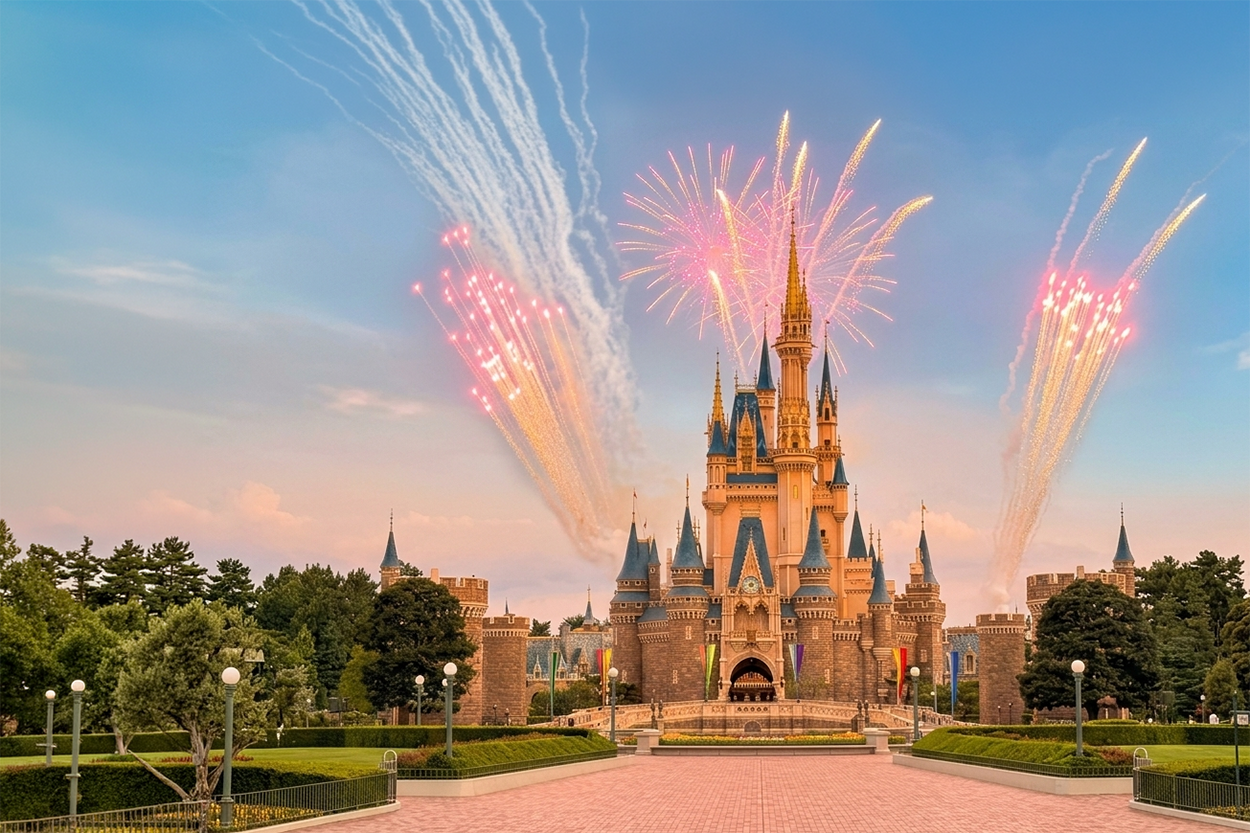
Rated as the best Disneyland park in the world!
Desayuno. A la hora acordada reunión en el lobby para traslado al parque de diversiones, entrada incluidas.
-
Inspirado en las películas producidas por Walt Disney, es inaugurado el 15 de abril de 1983 como el primer parque temático fuera de Estados Unidos, es una réplica de Magic Kingdom de Anaheim, California. Los apasionados del mundo Disney han catalogado al parque de Tokyo como el mejor a nivel mundial. No hace falta que te fascine el universo Disney, seguramente te divertirás con sus atracciones y experiencias únicas.
-
Throughout the year, you'll find seasonal shows that provide extra fun every time you visit. Tokyo Disneyland is made up of seven themed lands that you'll enjoy during your visit:
World Bazaar, Tomorrowland, Toontown, Fantasyland, Critter Country, Westernland y Adventureland.
At the end of the tour, return to the hotel. Overnight stay.
Día 11: TOKYO - MÉXICO
-
Desayuno. A la hora indicada, cita en el lobby para realizar check out, trasladarse al aeropuerto de Narita y tomar el vuelo de regreso.
*Sus habitaciones estarán disponibles hasta la hora de regular check-out del hotel. *en caso de más de 30 pax, Sus maletas serán enviadas aparte en camión
END OF OUR SERVICES
Traveler Assistance
Duration: 12 days
Traveling is one of the most enriching experiences, but it can also bring unexpected situations. From losing a suitcase to facing a medical emergency, having the right protection makes all the difference.
Our travel assistance offers clear advantages:
- Immediate attention, wherever you are.
- National and international medical coverage and extras (lost luggage, delays, legal assistance).
- 24/7 support in your language.
Exclusive benefits with Universal Assistance include:
- UNI, a virtual assistant that helps you with inquiries about your coverage.
- TravelTips by ChatGPT, an innovative tool with personalized travel advice.
Extended and flexible coverage, tailored to the needs of each destination and type of traveler.
COVERAGE WITH RATE
| EXCELLENCE | Complete Coverage | 150,000 USD | 12 USD (daily) |
| MAXIMUM | Premium Coverage | 300,000 USD | 15 USD (daily) |
| EXCLUSIVE | Top Coverage | 500,000 USD | 19 USD (daily) |
From age 71, the rate increases by 50%; over age 85, the increase is 100%
If you require more information, please contact us. Thank you.
Contact
 EN
EN  ES
ES